Complete Avocado Farming Guide for Coastal Kenya
Introduction
You see those perfect green avocados at the market, in restaurants, or on social media? The ones everyone’s adding to their breakfast toast, smoothies, and salads? Here’s something most people don’t know: you can grow them right here on Kenya’s coast.
I’m talking about real, profitable avocado farming in places like Mombasa, Kilifi, Kwale, and Taita Taveta. Not just a few trees in your backyard, but actual orchards that generate serious income year after year.
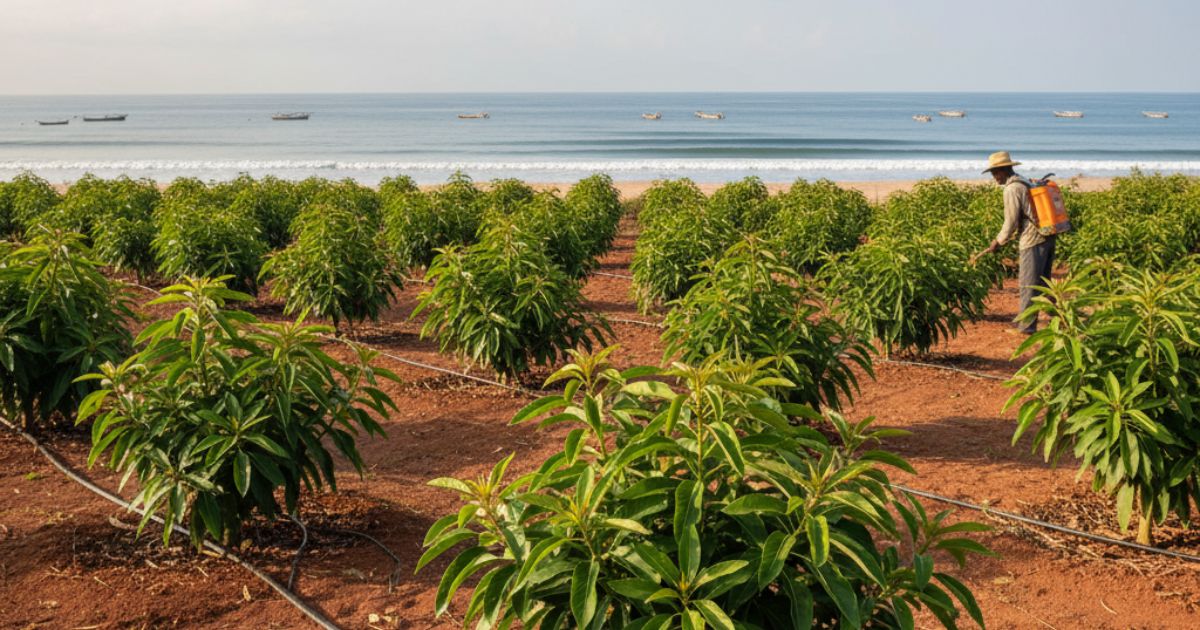
For a long time, people believed avocados only thrived in the highlands counties like Meru, Murang’a, Kiambu, Nakuru, Kisii, and Nyeri where cooler temperatures and higher elevations seemed perfect. Those regions are indeed Kenya’s avocado heartland. But here’s what’s changing fast: coastal farmers are discovering that with the right varieties, proper care, and organic methods, avocados can flourish in our warm, humid climate.
The demand, both local and international is growing faster than supply. Hotels need them, supermarkets want them, and export companies are actively looking for reliable coastal suppliers. While highland counties face saturated markets, coastal farmers enjoy better farm gate prices and less competition.
This guide covers everything you need to know: which varieties work best here, how much it costs to start, soil preparation secrets, organic farming methods, irrigation strategies, pest control, harvesting tips, and where to sell your avocados for the best prices.
I raise and sell healthy, grafted avocado seedlings grown using organic methods only. Everything I share here comes from real experience, the successes, the mistakes, and the lessons learned along the way.
Let’s get started.
Why Coastal Kenya Is Actually Good for Avocados
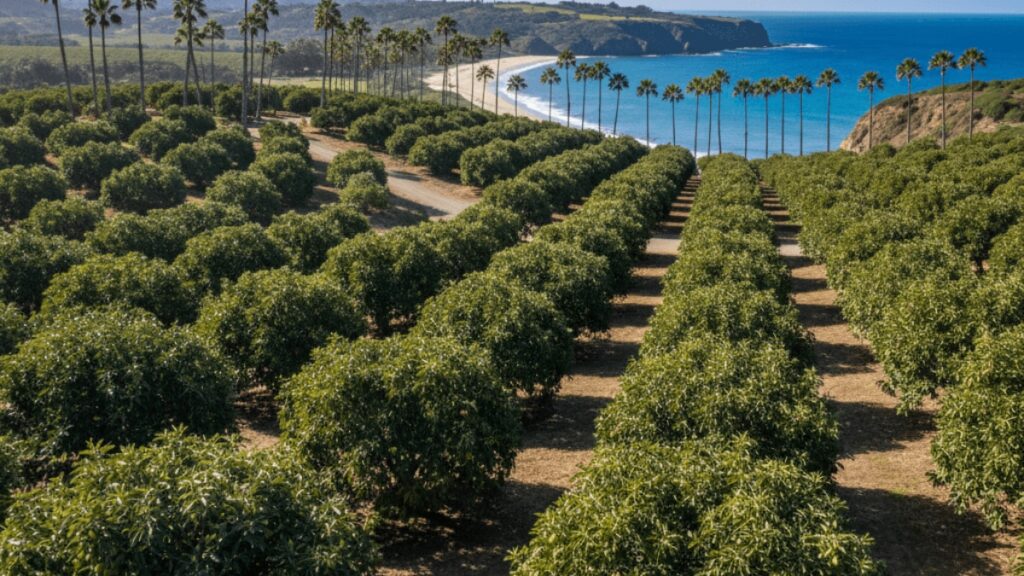
Most farmers think avocados belong in cooler highland areas like Meru, Murang’a, Kiambu, or Nakuru. Those counties are indeed avocado powerhouses. But here’s what’s changing: coastal Kenya is quietly becoming a viable avocado region, and early adopters are reaping the benefits.
Coastal Kenya offers unique advantages that smart farmers are starting to exploit:
Year-round warmth: Our temperatures rarely drop below 20°C, which means avocados can grow continuously without frost damage that highland farmers worry about. Avocados need full to partial sunlight and warm ground, which the coast provides naturally.
Two rainy seasons: The long rains (March-May) and short rains (October-December) provide natural irrigation cycles that reduce water costs during critical growing periods.
Port proximity: If you’re targeting export markets, being close to Mombasa port cuts your transport costs and keeps fruit fresher during shipping. Highland farmers in Meru, Embu, or Kiambu have to truck their avocados for 5-8 hours, you’re already at the doorstep.
Growing local demand: Tourist hotels in Malindi, Diani, and Watamu pay premium prices for fresh, quality avocados. The urban middle class in Mombasa and surrounding towns is expanding, and they want avocados regularly.
Available land: Compared to crowded highland counties where land prices have skyrocketed, coastal regions still have affordable agricultural land where you can establish serious orchards.
Less competition (for now): While highland counties like Kisii, Nyeri, and Makueni have saturated local markets, coastal farmers enjoy less competition and better farm gate prices.
Now, I won’t lie to you, coastal farming has challenges. Higher humidity means you’ll battle fungal diseases more than highland farmers. Salty soils in some areas need amendments. Water management during dry spells becomes critical. Avocados can die if they sit in waterlogged soil for as little as 48 hours, so drainage is crucial.
But these aren’t impossible problems. With knowledge and preparation, you can overcome them and build a thriving avocado farm.
The key is choosing the right varieties and committing to proper care from day one.
Best Avocado Varieties for the Coast
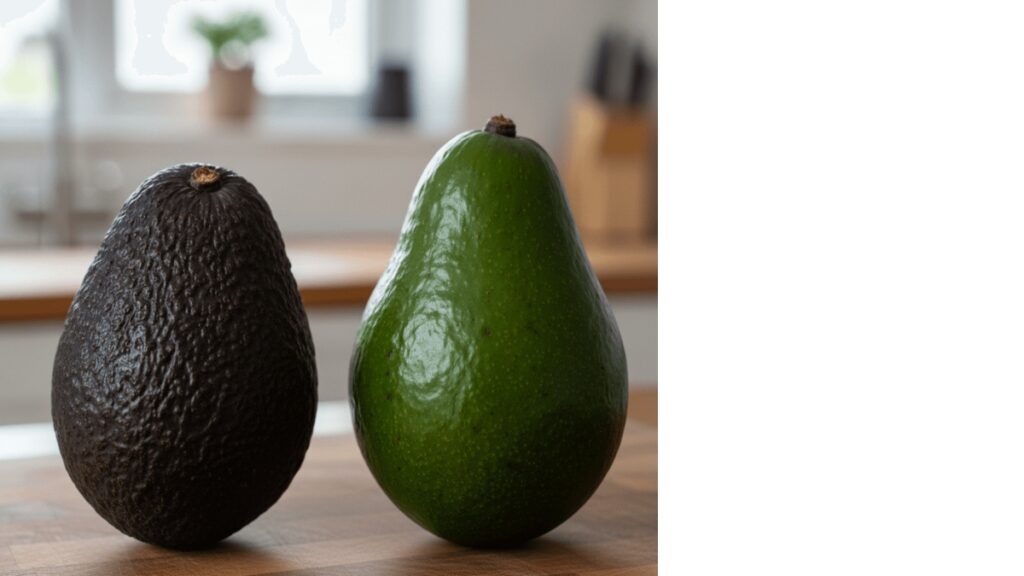
This is where most beginners make expensive mistakes. They buy whatever seedlings are cheapest or available, plant them, wait three years, and then discover the variety doesn’t perform well in coastal heat or isn’t what buyers want.
Save yourself that heartbreak. Here are the varieties that actually work on the coast:
1. Hass Avocado: The Export Champion
Hass is the king of commercial avocado farming worldwide, and it can work on the coast if you choose your location wisely.
What makes Hass special:
- Dark, pebbly skin that turns almost black when ripe
- Rich, buttery flavor with high oil content (what international buyers crave)
- Long shelf life, perfect for sea shipping to Europe and Middle East
- Premium export prices (Ksh 15-30 per fruit at wholesale)
- Globally recognized as the most popular avocado variety
Coastal considerations: Hass prefers slightly cooler temperatures than pure sea-level locations offer. Plant it in areas above 500 meters elevation, parts of Kilifi County, Taita Taveta hills, or cooler microclimates near forests.
At lower elevations, you’ll need extra care: drip irrigation, heavy mulching, and possibly shade cloth during the hottest months. It’s more work but worth it if you’re serious about exports.
Production notes: Hass trees are evergreen and may exhibit alternate bearing patterns, producing heavy crops one year followed by lighter yields the next. This is normal for the variety.
2. Fuerte Avocado: The Local Market Star
If Hass is the export variety, Fuerte is your reliable workhorse for local sales.
Why Fuerte works on the coast:
- Better heat tolerance than Hass
- Green, smooth skin that Kenyans recognize and love
- Pear-shaped fruits with excellent taste
- Starts producing earlier (Year 3-4 vs Year 4-5 for Hass)
- Strong local market demand
- Adapts well to subtropical climates
Hotels, restaurants, and local consumers in Mombasa actively seek Fuerte. While export prices are lower, you’ll have consistent buyers and steady cash flow as you wait for your Hass trees to mature.
3. Reed Avocado: The Coastal Performer
Reed is underrated but excellent for coastal conditions.
- Round, large fruits
- Nutty, rich flavor
- Handles heat better than Hass
- High yields once established
- Growing demand in local markets
- Well-suited for coastal regions
4. Pinkerton and Jumbo Kienyeji
Pinkerton: Smaller fruits but exceptional quality. Adaptable to various altitudes. Good for niche markets.
Jumbo Kienyeji: The local champion. Large fruits, disease-resistant, and familiar to Kenyan consumers. Easy to sell locally but limited export potential.
My Recommended Mix
Plant in proportions:
- 60% Hass – Your long-term export income
- 30% Fuerte – Immediate local sales and cash flow
- 10% Reed or others – Diversification and testing
This strategy hedges your bets. You’re not putting all your money on one variety, and you have multiple income streams as trees mature at different rates.
Starting Costs: What You’ll Actually Spend
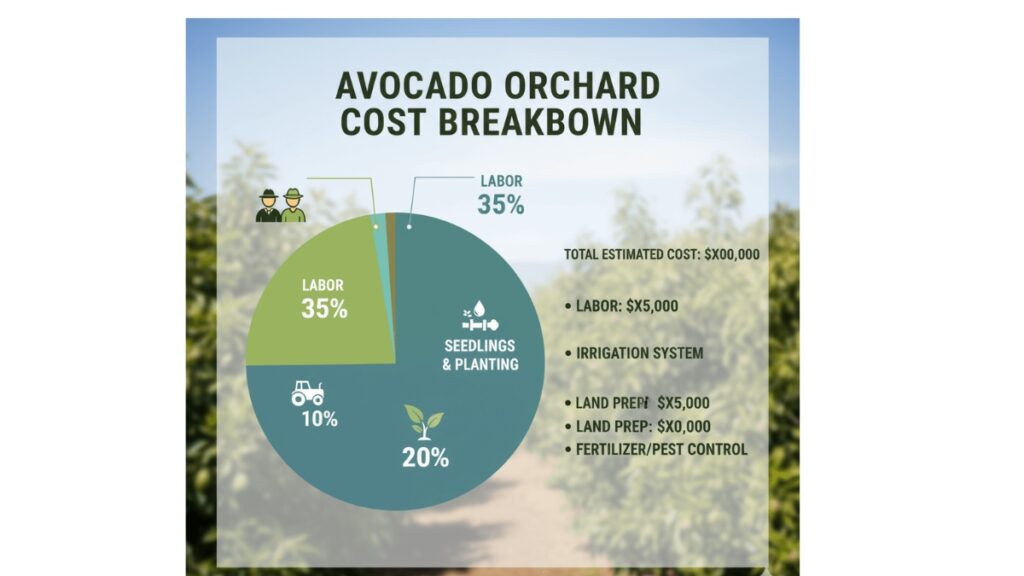
Let’s talk real numbers. Here’s what a one-acre avocado farm costs to establish on the coast:
| Expense Item | Cost Range (Ksh) | Notes |
|---|---|---|
| Land preparation | 15,000 – 25,000 | Clearing, hole digging, soil testing |
| Seedlings (100 trees @ 200-300) | 20,000 – 30,000 | Only buy grafted, certified stock |
| Drip irrigation system | 80,000 – 150,000 | Non-negotiable for coastal success |
| Organic fertilizer & compost | 30,000 – 50,000 | Manure, compost, seaweed fertilizer |
| Organic pesticides | 10,000 – 20,000 | Neem oil, compost tea, copper spray |
| Labor (planting & initial care) | 20,000 – 40,000 | First season costs |
| Mulching materials | 10,000 – 20,000 | Grass, leaves, or purchased mulch |
| TOTAL YEAR 1 | 190,000 – 350,000 | About $1,500 – $2,700 USD |
Years 2-4 maintenance: Budget 60,000-100,000 Ksh annually for fertilizer, irrigation, pruning, and pest management.
Timeline to profit:
- Year 1-3: Investment phase, possible intercrop income
- Year 4-5: First significant harvests (50-150 fruits per tree)
- Year 6+: Full commercial production (300-500 fruits per tree)
- Year 7-8: Peak production begins
Mature farm income: A well-managed acre can generate 300,000 – 800,000 Ksh yearly once trees are fully productive. Some exceptional farms with Hass can see up to 1,000 fruits per mature tree annually.
Yes, this is a long-term investment. But avocado trees produce for 30-40 years, many healthy grafted trees live 50+ years. Calculate the lifetime value: even at conservative estimates, you’re looking at 10-25 million Ksh from one acre over 30 years. Few agricultural investments match that.
Soil Preparation: The Foundation of Success
Avocados are particular about soil. Get this wrong and you’ll struggle for years.
What Avocados Need
Perfect soil profile:
- pH level: 6.0-6.5 (slightly acidic to neutral, maximum pH 7)
- Texture: Loamy with excellent drainage
- Depth: Minimum 1 meter for deep root growth
- Organic matter: High content (3-5%)
Coastal Soil Challenges
Problem 1: Heavy clay soil Many coastal areas have clay that holds too much water. Avocado roots hate “wet feet”, they’ll rot in waterlogged soil. Trees can die if sitting in saturated soil for as little as 48 hours.
Solution: When digging planting holes (3ft x 3ft x 3ft), mix excavated soil with equal parts compost and coarse sand. If drainage is severe, plant on raised mounds.
Problem 2: Sandy soil Some coastal areas have sandy soil that drains too fast and holds few nutrients.
Solution: Add massive amounts of organic matter, compost, aged cow manure, and mulch. This improves water retention and builds fertility over time.
Problem 3: Salty soil If you’re very close to the ocean, salt in the soil can damage avocado roots.
Solution: Apply gypsum (calcium sulfate) to help leach salts deeper. Ensure excellent drainage so salts don’t accumulate at root level. Mulch heavily to prevent capillary rise of salty water.
The Soil Test Investment
Before planting anything, get a professional soil test. It costs 2,000-5,000 Ksh and tells you exactly what your soil needs; pH levels, nutrient content, and specific recommendations.
Contact KALRO offices in Mtwapa or Matuga, or private labs in Mombasa. They’ll test pH, nutrient levels, and give specific recommendations for your farm.
This small investment saves you from years of guessing and wasted fertilizer money.
Planting: Timing and Technique
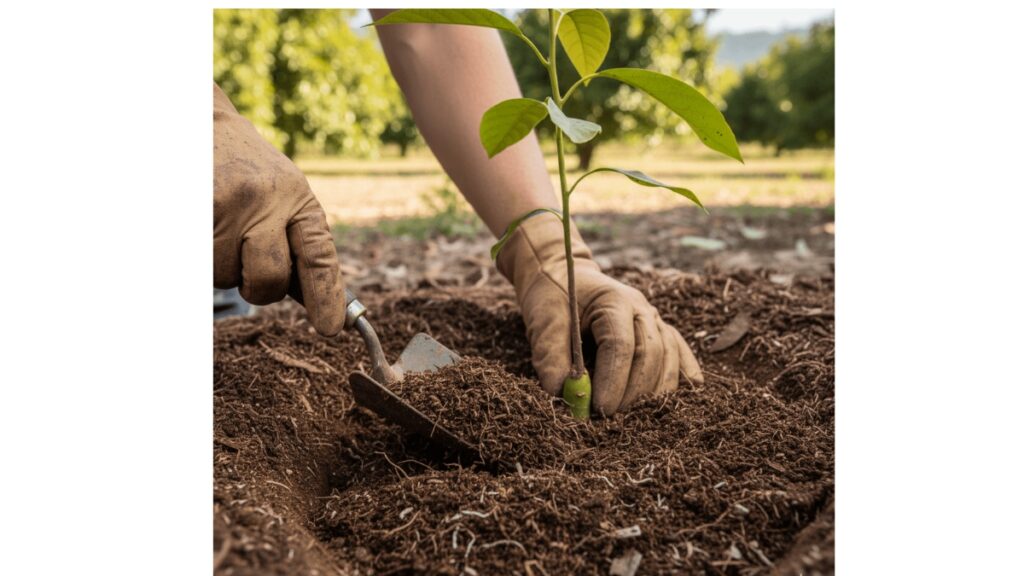
When to Plant
Best planting windows:
- March-June: Long rains season, ideal as avocado trees like warm ground
- October-November: Start of short rains
Why these times? Your seedlings need consistent moisture to establish roots without drowning. Planting during rain onset means nature handles most of your watering during the critical first months. Avocados prefer full sun positions and staying relatively dry between waterings.
Avoid: Dry season planting (January-February, July-September) unless you have guaranteed daily irrigation. One missed watering and your expensive seedlings can die.
Spacing That Works
Recommended spacing: 6m x 6m (about 120 trees per acre)
Standard spacing in Kenya is 5m x 5m, which accommodates about 150-162 trees per acre. Some intensive farmers push up to 220 trees per acre using 5m x 3m spacing or closer. However, for Hass avocados specifically, recommended spacing is 7m x 7m (about 80-85 trees per acre) for optimal long-term results.
Here’s why I recommend 6m x 6m for the coast (a middle ground):
- Better air circulation (reduces fungal diseases in humid coastal air)
- Easier harvesting and maintenance
- Trees develop fuller canopies without crowding
- Room for intercropping during early years
- Longer productive life without intensive pruning
- Balanced tree density; not too sparse, not too cramped
Highland farmers can sometimes get away with tighter 5×5 spacing. On the humid coast where disease pressure is higher, give your trees more breathing room. Mature avocado trees can reach 5-10 meters tall and need space.
Planting Step-by-Step
3 weeks before planting:
- Dig holes 3ft x 3ft x 3ft (90cm x 90cm x 90cm)
- Mix topsoil with 20-30kg well-rotted compost or manure
- Add handful of bone meal for phosphorus
- Fill holes halfway and let rain settle the mixture
Planting day:
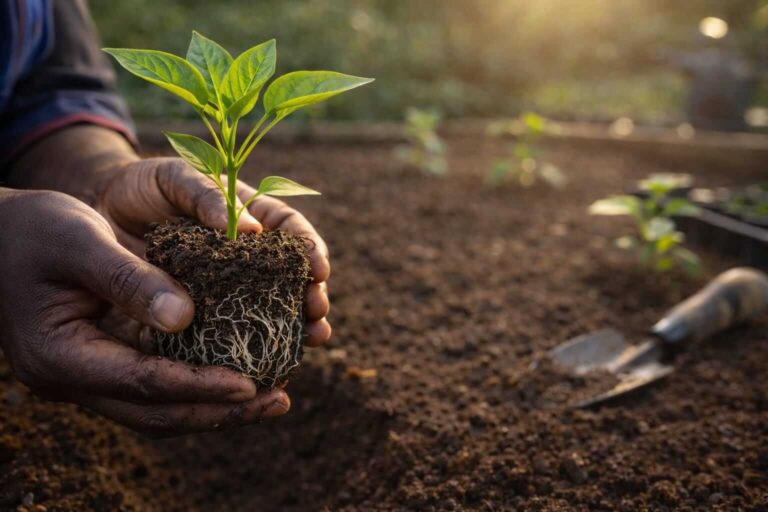
- Dig a hole in the prepared mixture exactly the size of your seedling bag
- Carefully remove seedling without breaking the root ball
- Plant at the same depth as it was in the nursery bag
- The grafting union should be 10-15cm above soil level
- Firm soil gently around the seedling
- Water thoroughly (20-30 liters)
- Apply thick mulch in 1-meter circle around base (don’t let mulch touch the stem)
- Install temporary shade for 2-3 months if planting in hot season
Pro tip: Plant on a slight mound (5-10cm raised) so water never pools around the trunk. Avocados would rather be too dry than too wet.
Irrigation: The Make-or-Break Factor
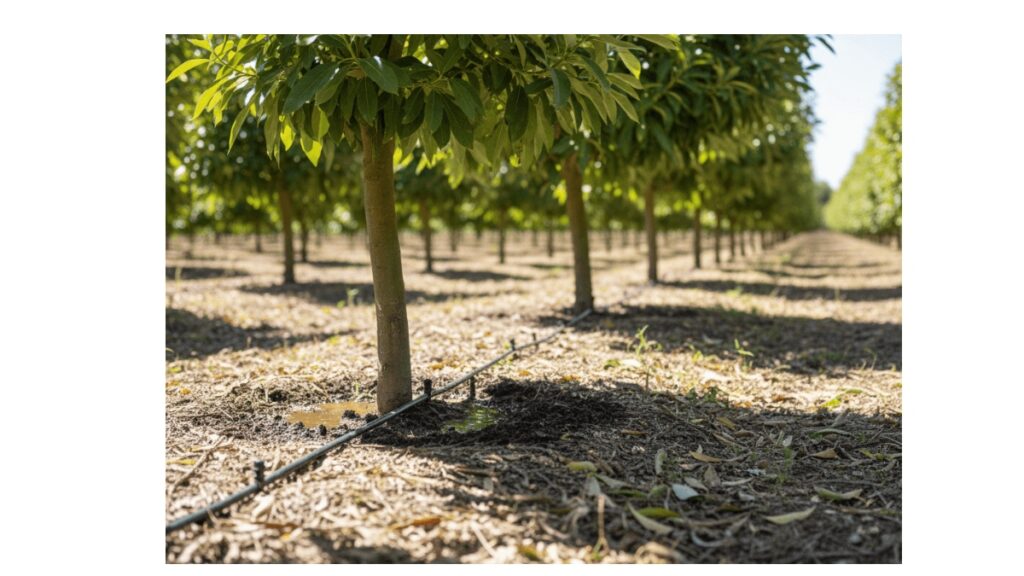
People see coastal humidity and assume water isn’t a problem. Wrong.
Humidity doesn’t equal soil moisture. Coastal Kenya has serious dry spells, especially January-March and June-September. During these periods, without irrigation, your trees will stress, drop fruit, and potentially die.
Avocados enjoy staying dry between waterings, but they need regular moisture to thrive.
Why Drip Irrigation Is Essential
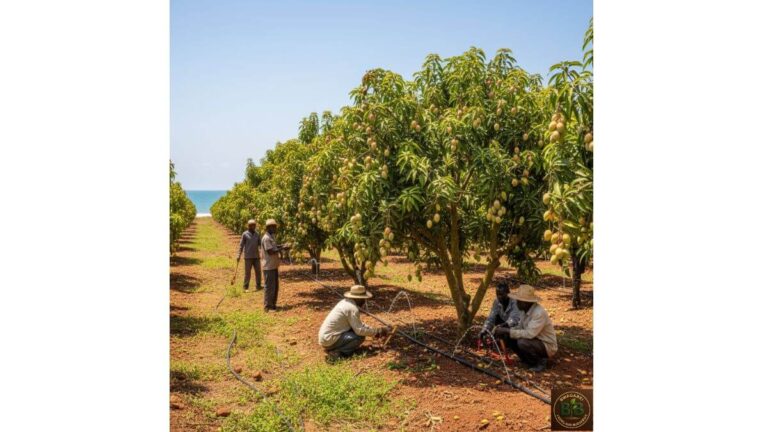
Forget flood irrigation or overhead sprinklers. For avocados on the coast, drip irrigation is non-negotiable.
Benefits:
- Water efficiency: Use 70% less water than flood methods
- Reduces fungal diseases by keeping foliage dry
- Delivers fertilizer directly to roots (fertigation)
- Lower labor costs
- Precise control over moisture levels
Cost: 800-1,500 Ksh per tree for complete drip system setup
Yes, it’s expensive upfront. But it pays for itself within two years through water savings, reduced disease, and healthier, more productive trees.
Solar-Powered Irrigation
If your water source is a borehole or you have unreliable grid power, invest in solar pumps.
Benefits:
- Zero running costs after installation
- Reliable in sun-rich coastal climate
- Environmentally friendly
- Independence from KPLC
Cost: 150,000-300,000 Ksh for small system (sufficient for 1-3 acres)
Sounds expensive, but calculate: if you’re pumping water daily with a diesel generator, you’re spending 5,000-10,000 Ksh monthly on fuel. Solar pays for itself in 2-3 years.
Irrigation Schedule
Young trees (Year 1-2):
- 20-30 liters per tree
- 2-3 times weekly
- Increase frequency during hot, dry periods
Mature trees (Year 3+):
- 50-100 liters per tree
- Twice weekly normally
- Daily light irrigation during flowering and fruit development
Monitoring tip: Check soil moisture at 30cm depth. If soil is dry at that level, it’s time to irrigate. Simple soil moisture meters cost 2,000-5,000 Ksh and take the guesswork out.
Mist leaves occasionally to increase humidity if growing indoors or in very dry conditions, but main watering should be at root level.
Organic Feeding: Building Healthy, Productive Trees
I grow all my seedlings and trees using organic methods only. No chemical fertilizers. Here’s why and how:
Chemical fertilizers give quick results but destroy soil structure over time. They kill beneficial microorganisms, reduce organic matter, and create dependency. Your soil becomes addicted, stop using chemicals and growth crashes.
Organic methods build soil health year after year. Your trees become more resilient, fruit quality improves, and you can access premium organic markets.
What Avocados Need Nutritionally
- Nitrogen (N): For growth and development
- Potassium (K): For growth and fruit bearing
- Phosphorus (P): For healthy root systems
- Boron: Essential for growth
- Zinc: Critical for fruit development
- Magnesium & Calcium: Overall tree health
Avocados don’t like excessive nitrogen, it encourages rapid, spindly growth with weak wood. Balanced nutrition is key.
Feeding Schedule
Young trees (Year 1-3):
- 20-40kg compost or well-rotted cow manure per tree annually
- Apply in split doses: half at start of long rains, half at start of short rains
- Monthly foliar spray with compost tea or seaweed extract
- Bone meal or rock phosphate once yearly for root development
- Young trees: fertilize every 4-6 weeks during growing season (March-October)
Mature trees (Year 4+):
- 40-60kg compost or manure per tree annually
- Increase amount based on tree size and vigor
- Continue monthly compost tea applications
- Add wood ash occasionally for potassium
- Older trees: fertilize in late winter and early summer
Application Tips
- Spread fertilizer evenly at the tree’s drip line (outer edge of canopy), not against the trunk
- Water thoroughly after application
- Adjust based on tree growth observation, vigorous growth means good nutrition
- Conduct regular soil tests to monitor nutrient levels and pH
Making Your Own Compost Tea
This liquid gold boosts tree immunity and provides nutrients:
- Fill a 20-liter bucket halfway with good compost
- Add water and molasses (100ml)
- Let it steep for 3-5 days, stirring daily
- Strain and dilute 1:10 with water
- Spray on leaves or apply to soil
Cost: Almost free if you make your own compost. Results: Healthier trees, better disease resistance, improved yields.
Seaweed Fertilizer
If you live along the coast, you already have a natural fertilizer nearby: seaweed. I collect, clean, and process this seaweed into organic fertilizer rich in micronutrients and natural growth boosters. It helps avocado trees grow stronger and healthier. You can mix it into compost, spread it as mulch, or use it as a foliar spray. I sell this seaweed fertilizer ready to use for your farm or garden.
Pest and Disease Management
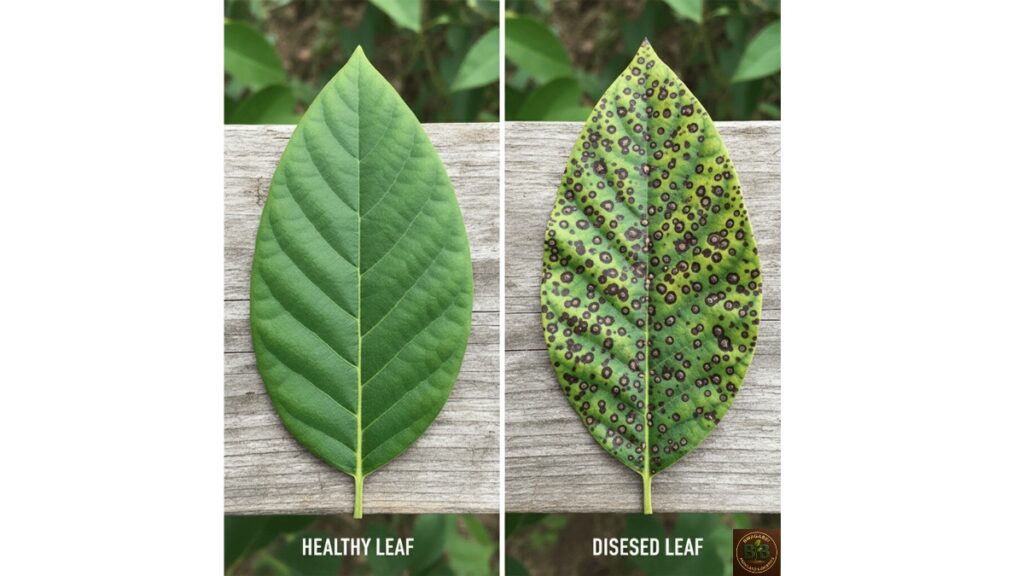
Coastal humidity creates perfect conditions for diseases. Stay vigilant.
Common Threats
1. Anthracnose (Fungal Disease) Symptoms: Dark brown or black spots on leaves and fruit
Organic solutions:
- Copper-based fungicides (approved for organic farming)
- Neem oil spray every 2-3 weeks during rainy season
- Prune for better airflow
- Remove and burn infected fruit
2. Root Rot (Phytophthora) Symptoms: Yellowing leaves, wilting despite adequate water, stunted growth
Solutions:
- Improve drainage immediately
- Avoid overwatering
- Apply beneficial fungi (Trichoderma) to soil
- Ensure planting on raised ground
3. Thrips Symptoms: Silvery scars on fruit surface, distorted leaves
Solutions:
- Neem oil spray
- Blue sticky traps
- Encourage predatory insects by planting flowering herbs nearby
4. Scale Insects Symptoms: Small bumps on stems and leaves, sticky honeydew, sooty mold
Solutions:
- Soft brush dipped in soapy water to remove scales
- Neem oil or horticultural oil spray
- Release beneficial insects like ladybugs
Prevention Strategy
The best pest control is prevention:
- Regular monitoring (walk through your orchard weekly)
- Prune trees annually for airflow and light penetration
- Collect and destroy fallen fruit (breeding ground for pests)
- Maintain thick mulch (suppresses soil-borne diseases)
- Use compost tea to boost plant immunity
- Plant diverse herbs and flowers to attract beneficial insects
Pruning and Tree Maintenance
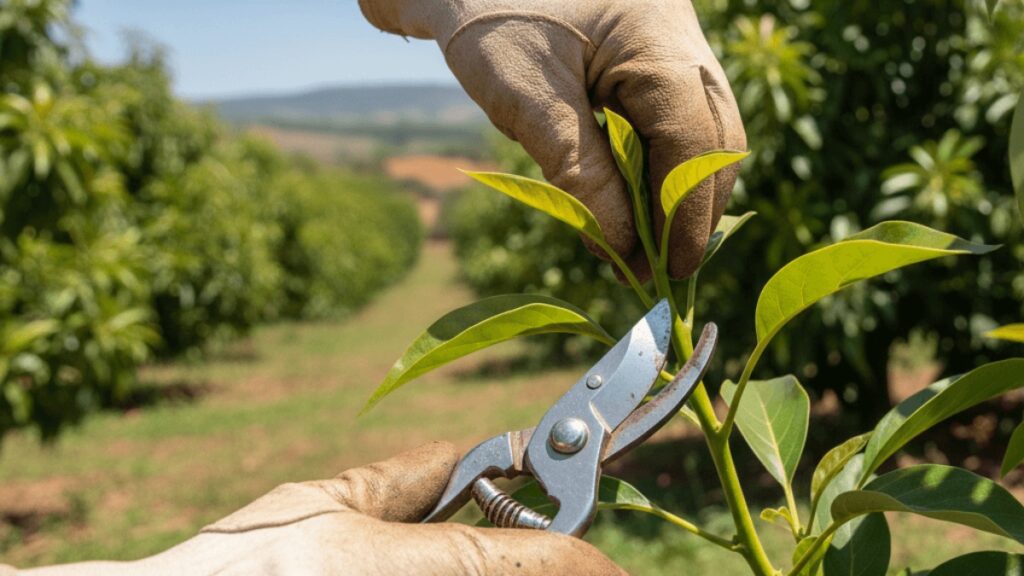
Avocados left unpruned become tall, dense, and difficult to manage. Proper pruning keeps trees productive and harvest-friendly.
When to Prune
- Light pruning: After harvest (remove dead wood, crossing branches)
- Structural pruning: During dry season
- Never prune: During flowering or heavy rains
What to Remove
- Dead, diseased, or damaged branches (always)
- Branches crossing or rubbing against each other
- Water sprouts (vigorous vertical shoots from trunk or main branches)
- Low-hanging branches touching soil (disease entry point)
- Dense interior growth blocking light and air
Goal: Create an open center, maintain 2-3 meter height for easy picking, ensure sunlight reaches interior branches.
Tools: Sharp pruning shears, loppers, pruning saw. Always sterilize between trees (dip in 10% bleach solution) to prevent disease spread.
Harvesting: Getting the Timing Right
This is where impatience destroys profits. Harvest too early and you’ll have hard, tasteless fruit that never ripens properly. Buyers will reject it, and your reputation suffers.
How to Know Avocados Are Ready
Avocados mature on the tree but ripen off it. Here’s how to tell they’re ready for harvest:
Test method (most reliable):
- Pick one fruit when you think it’s ready
- Let it sit at room temperature for 5-7 days
- If it softens nicely and tastes good, the rest are ready
- If it stays hard or tastes terrible, wait another 2 weeks and test again
Visual clues:
- Fruit has reached full size for its variety
- Slight color change (Hass skin begins darkening, turning almost black when mature)
- Fruit stems show slight yellowing
Timing from flowering:
- Hass: 7-8 months
- Fuerte: 6-7 months
- Reed: 7-8 months
Harvest seasons on the coast:
- Main harvest: June-September (peak July-August)
- Secondary harvest: January-March (depending on flowering patterns)
Proper Picking Technique
- Use picking poles with cutters for high fruit
- Leave 1-2cm stem attached (prevents rot entry point)
- Handle fruit gently, bruises lead to rot
- Harvest into padded crates or buckets
- Never drop fruit or toss between people
- Sort immediately: export grade, local market, processing/damaged
Expected Yields
- Year 3: First harvest (grafted trees), 70-100 fruits
- Year 4-5: 50-150 fruits per tree (increasing production)
- Year 6-7: 200-300 fruits per tree
- Mature tree (8+ years): 300-500 fruits per tree
- Exceptional Hass trees: Up to 1,000 fruits annually
At Ksh 15-25 per fruit (export/premium local), one mature tree can earn you 4,500-12,500 Ksh yearly. Multiply that by 100 trees per acre.
Note on alternate bearing: Hass and some other varieties may produce heavy crops one year followed by lighter yields the next. This is normal, plan your finances accordingly.
Market Access: Where to Sell Your Avocados
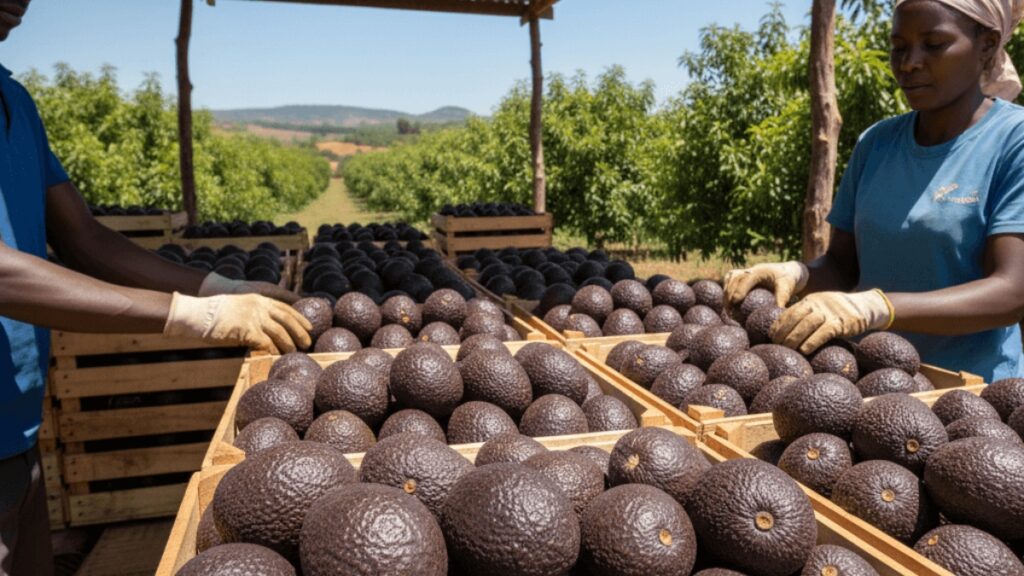
Selling avocados profitably in coastal Kenya involves meeting strict export requirements and partnering with reputable buyers. Your summarized market access advice is accurate, but there are some recent updates and practical guidance that should be considered for 2025.
Verified Export Requirements
- Export buyers, especially those serving Kenya’s coastal region, continue to require GlobalGAP or equivalent certification, consistent fruit quality and volume, and robust traceability systems.
- Established relationships with export companies are key for successful transactions. Many buyers still prefer farmers who can deliver large quantities reliably over multiple seasons.
Major Export Buyers
- Kakuzi PLC and Keitt Exporters remain leading avocado exporters from Kenya. However, as of 2025, Frescho, Hass Avocado Cooperative, and members of FPEAK (Fresh Produce Exporters Association of Kenya) are increasingly active in sourcing from coastal farmers.
- FPEAK membership is a strong signal of legitimacy and export readiness, so joining or networking with member companies is recommended.
Export Prices
- Export prices for avocados in 2025 range from Ksh 20 to Ksh 45 per fruit, depending on size, quality, and export destination.
- Prices can be volatile based on global demand, exchange rates, and local supply surges. Most exports target the EU and Middle East, where demand currently remains strong.
Volume and Group Selling
- Exporters generally require minimum volumes (often 2-5 tons per consignment), favoring groups and cooperatives for reliable supply.
- Forming or joining a local cooperative is more crucial than ever, as many export contracts are reserved for organized farmer groups.
Reality check: Export companies usually want large volumes and long-term contracts. Consider joining a cooperative or forming a group with neighboring farmers to meet volume requirements.
Local Markets (Don’t Ignore These!)
Direct buyers:
- Tourist hotels in Diani, Watamu, Malindi (premium prices for consistent supply)
- Supermarkets: Naivas, Carrefour, Chandarana
- Restaurants and cafes in Mombasa, Kilifi
- Urban markets: Kongowea, Mariakani, Kilifi town
Local prices: Ksh 10-30 per fruit depending on quality and season
Pro tip: Establish relationships before your first harvest. Visit hotel procurement offices, talk to supermarket produce managers, network at agricultural shows.
Value Addition Opportunities
Don’t just sell raw fruit:
Avocado oil: Sells for 1,500-3,000 Ksh per liter. Small oil presses cost 150,000-250,000 Ksh.
Dried avocado slices: Growing snack market, longer shelf life
Guacamole/puree: Hospitality industry demand, food processors
Cosmetics: Skincare products, high margins
Value addition can double or triple your per-fruit income.
Intercropping: Earning While You Wait
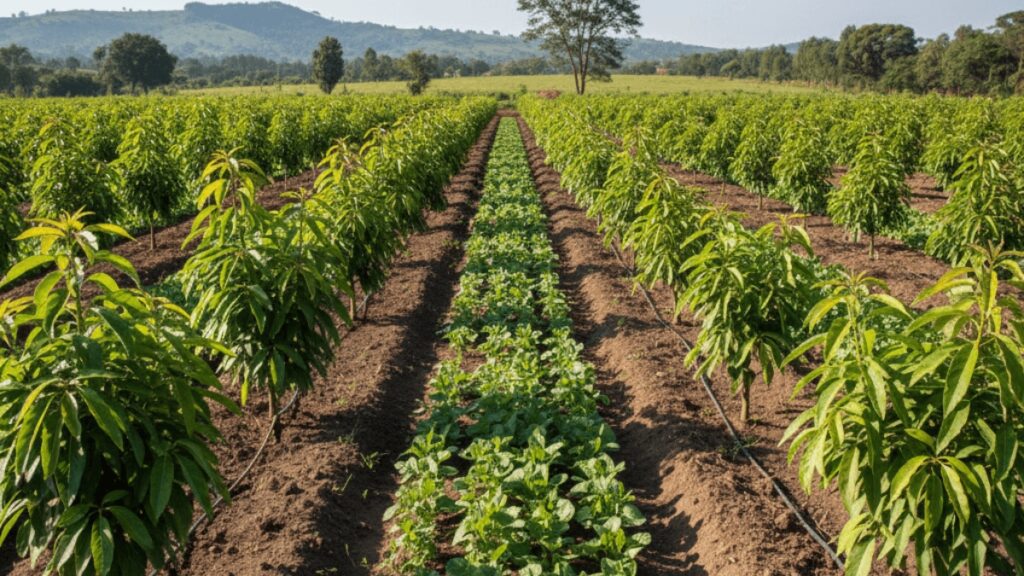
Years 1-4, your avocado trees aren’t producing much. That space between trees is money sitting idle.
Compatible Intercrops
Short-term cash crops:
- Beans and peas (add nitrogen to soil, 3-month crop cycle)
- Vegetables: kales, spinach, tomatoes (before canopy closes)
- Herbs: lemongrass, mint (natural pest repellents, good market)
- Pineapples (tolerates partial shade, long-term income)
Longer-term companions:
- Passion fruit (train on wires between trees)
- Bananas (provide shade for young avocados, fruit income)
- Cassava (drought-tolerant, minimal care)
Avoid: Maize (heavy feeder, competes for nutrients), crops requiring deep tilling
Smart intercropping can generate 50,000-150,000 Ksh per acre in years 1-4, helping cover maintenance costs while avocados mature.
Why Buy Seedlings From Me
I sell healthy, grafted avocado seedlings grown entirely with organic methods.
What you get:
- Certified Hass, Fuerte, and Reed varieties
- KEPHIS-certified, disease-free planting material
- Strong root systems (no chemicals, just good compost)
- High survival rate after transplanting (grafted seedlings adapt better)
- Free planting guidance
- Organic fertilizer and pest control advice
- Delivery available in coastal counties
Pricing: Ksh 200-300 per grafted seedling (competitive with market rates)
Why organic matters: Seedlings raised organically are naturally more resilient. They’re not addicted to chemical fertilizers, so they adapt better to your farm’s conditions. Grafted seedlings produce fruit within 3-4 years vs 7+ years for seed-grown trees.
Plus, I provide ongoing support. You’re not just buying seedlings, you’re getting a partner who wants to see your farm succeed.
Contact me for current seedling availability and prices.
Frequently Asked Questions (FAQs)
Conclusion
Avocado farming on Kenya’s coast isn’t for everyone. It requires patience, capital, and a willingness to learn. But for those who commit, the rewards are substantial and long-lasting.
What you can realistically expect: ✓ Annual income of 300,000-800,000 Ksh per acre once mature (year 6+) ✓ Trees producing for 30-40 years (some live 50+ years) ✓ Growing export and local demand (market expanding faster than supply) ✓ Multiple income streams through intercropping and value addition ✓ Pride in building something lasting for your family
The coastal region’s avocado industry is still young compared to highland counties like Meru, Murang’a, and Kiambu. Get in now with proper knowledge and organic preparation, and you position yourself ahead of the inevitable rush.
Here’s what successful coastal avocado farmers do differently:
- They start with KEPHIS-certified, grafted seedlings from reputable suppliers
- They invest in proper drip irrigation from day one (non-negotiable)
- They build soil health with organic methods that compound over time
- They plant mixed varieties (Hass, Fuerte, Reed) for multiple income streams
- They establish market relationships 6-12 months before first harvest
- They stay patient and focused on long-term success (years 5-30)
- They join farmer cooperatives for better market access and knowledge sharing
- They continuously learn and adapt their practices
The math that makes it worthwhile:
One mature tree produces 300-500 fruits annually. At Ksh 20 per fruit (conservative average), that’s 6,000-10,000 Ksh per tree per year. With 100 trees per acre, you’re looking at 600,000-1,000,000 Ksh annually once established.
Over 30 years, that’s 18-30 million Ksh from one acre. Few investments—agricultural or otherwise—offer that kind of return with the stability of perennial tree crops.
Your land is waiting. The market is ready. The question is: are you?
Take Action Today
Ready to start your avocado farm the right way?
I’m here to help. Whether you need:
- Quality, organically-grown avocado seedlings (Hass, Fuerte, Reed)
- Advice on organic fertilizers and soil preparation
- Guidance on irrigation system setup
- Pest and disease management strategies using organic methods
- Market connection support
- Step-by-step consultation from planting to harvest
I provide:
- KEPHIS-certified grafted seedlings at competitive prices (Ksh 200-300)
- Free planting guidance with every seedling purchase
- Ongoing support via phone/WhatsApp
- Delivery available within coastal counties (Mombasa, Kilifi, Kwale, Taita Taveta)
- Organic farming training and resources
Contact me directly for:
- Current seedling availability and bulk discounts
- Site visit and soil assessment consultation
- Custom planting plans for your specific location
- Connection to other successful coastal avocado farmers
Your future self, counting harvest income in year 5 and beyond, will thank you for starting today with the right foundation.
Message me now for free consultation and current seedling prices.
Additional Resources
Recommended Reading & Organizations:
- KALRO Coastal Research Center (Mtwapa, Matuga) – Technical support and training
- Fresh Produce Exporters Association of Kenya (FPEAK) – Export market connections
- Horticultural Crops Directorate (HCD) – Market information and regulations
- County Agricultural Extension Services – Free local advice and demonstrations
Market Contacts:
- Kakuzi Limited – Major exporter
- Keitt Exporters – Coastal access
- Local hotel procurement offices (Serena, Whitesands, etc.)
Remember: The best time to plant avocado trees was five years ago. The second-best time is today.
Start with quality organic seedlings, invest in proper irrigation, build your soil health naturally, and play the long game. Your patience will be rewarded with decades of reliable income from one of agriculture’s most profitable tree crops.
Let’s grow your avocado farm together—organically, sustainably, and profitably.
Contact me today to reserve your seedlings for the next planting season.