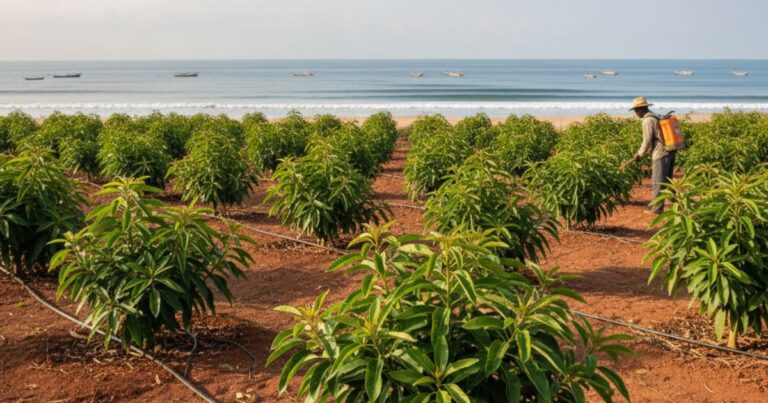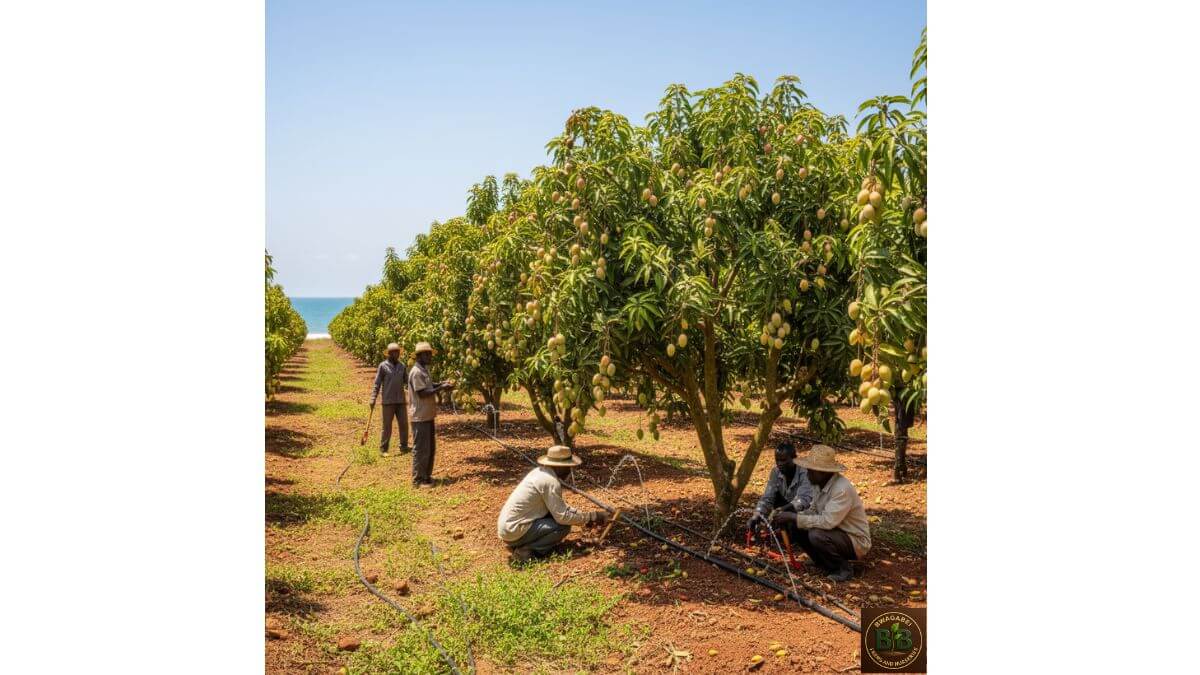
Complete Mango Farming Guide for Coastal Kenya – 2025 Edition
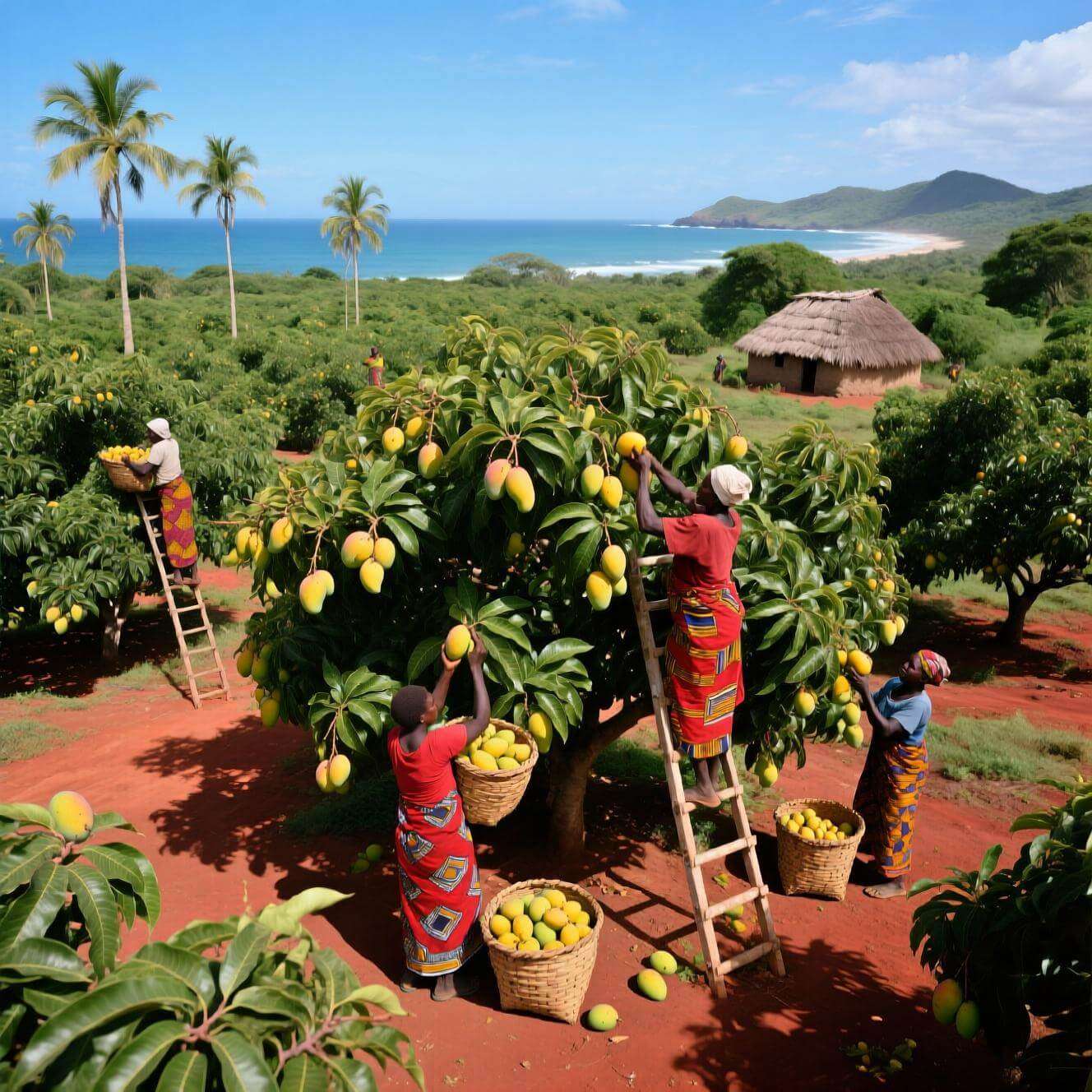
Introduction
Mango farming in Kenya’s coastal region represents one of the most lucrative agricultural opportunities available today. The coastal strip, encompassing Mombasa, Kilifi, Kwale, Taita-Taveta, and Lamu counties, provides ideal conditions with temperatures between 24-32°C, adequate rainfall patterns, and sandy-loam soils that mangoes thrive in.
With Kenya being among Africa’s top mango producers and the global market for mangoes expected to reach $69.1 billion by 2030, coastal farmers are positioned to capitalize on both domestic consumption and export opportunities to the EU, Middle East, and regional markets.
Climate Advantages of Coastal Kenya
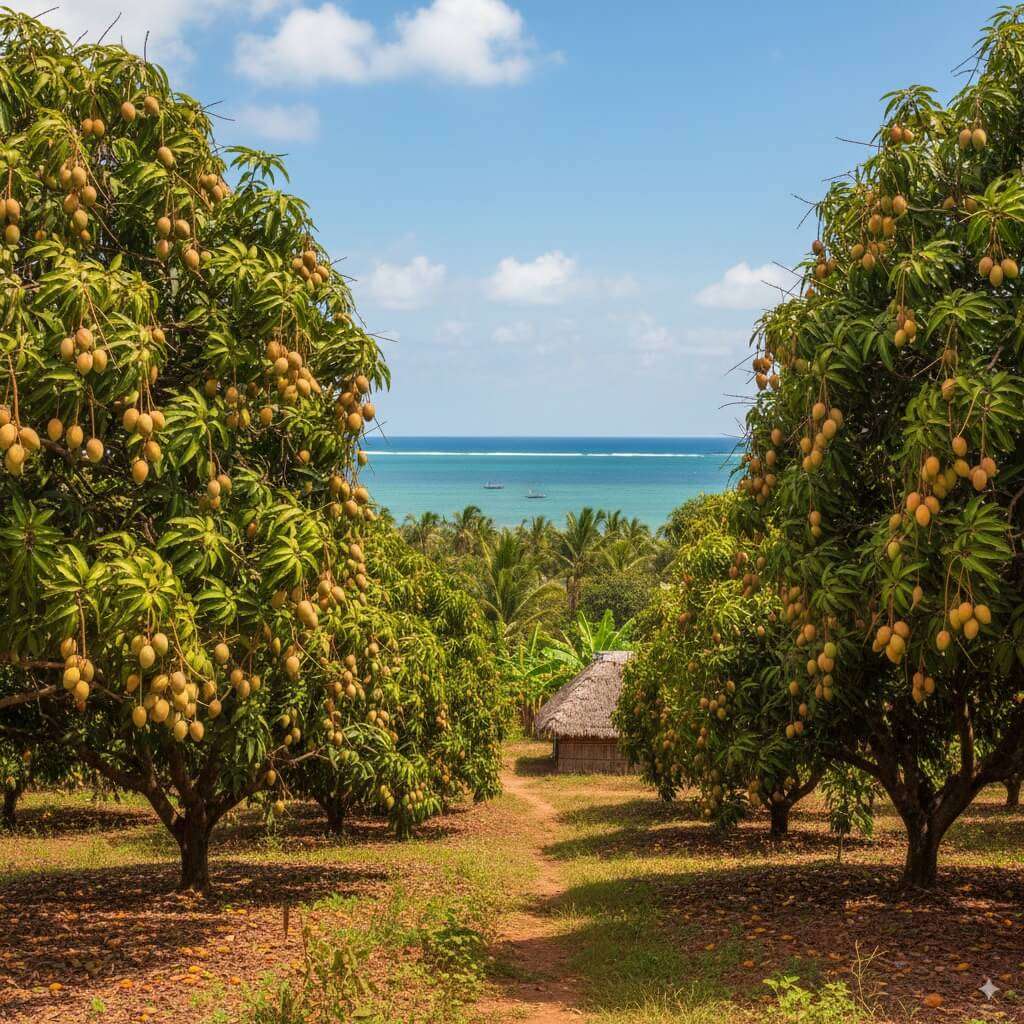
The coastal region offers several unique advantages:
- Optimal Temperature Range: 24-32°C year-round, perfect for mango cultivation
- Altitude: Sea level to 500m above sea level – ideal for most commercial varieties
- Rainfall Pattern: 800-1200mm annually with distinct wet and dry seasons
- Humidity: Moderate to high humidity levels that many varieties tolerate well
- Soil Drainage: Sandy soils provide excellent drainage, preventing root rot
Top Mango Varieties for Coastal Kenya
1. Export-Oriented Varieties
Kent Mango
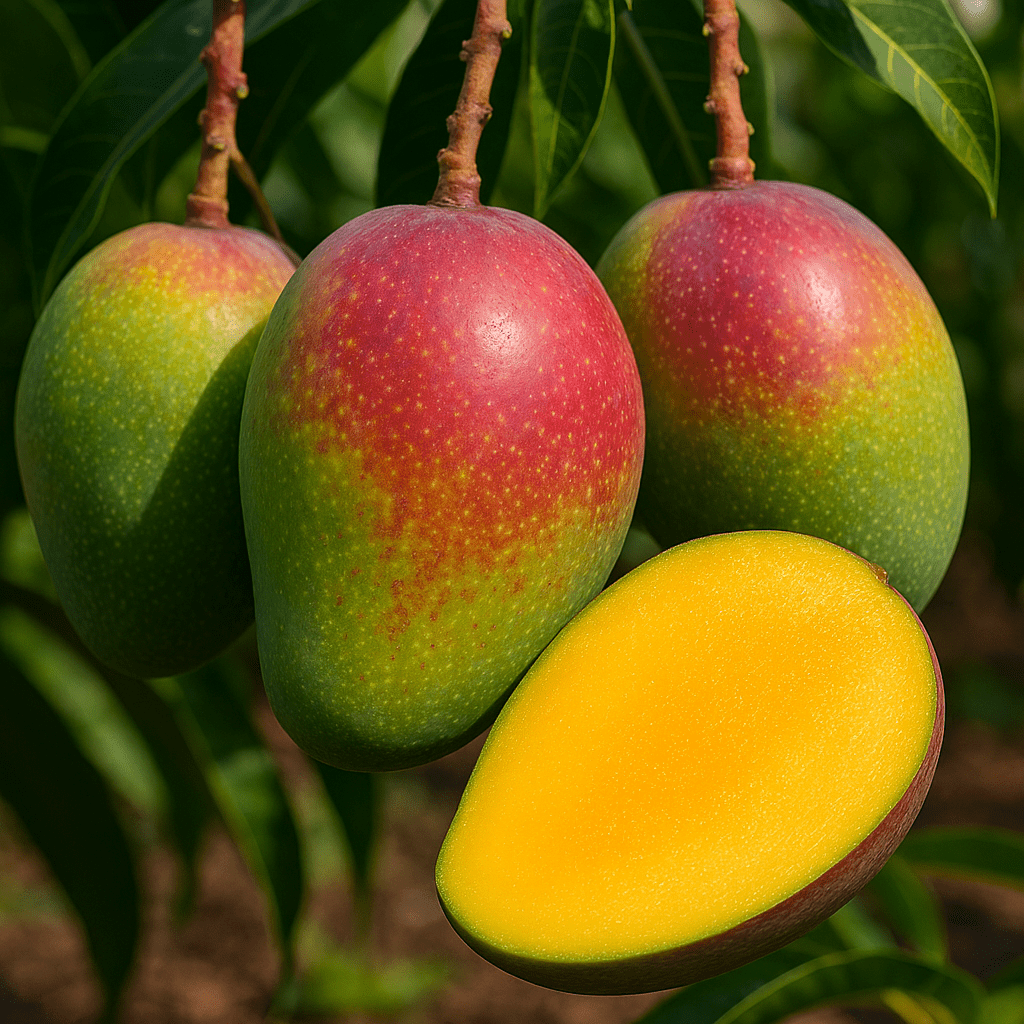
- Key Features: Large, greenish-yellow fruits with crimson blush, fiberless flesh
- Why Choose Kent: Excellent shelf life (14-21 days), high export demand, premium pricing
- Yield Potential: 800-1,200 fruits per mature tree
- Market Advantage: Preferred by European buyers, commands 30-40% higher prices than local varieties
- Harvest Season: December-March
Tommy Atkins
- Key Features: Firm texture, good disease resistance, excellent shipping qualities
- Why Choose Tommy Atkins: Superior post-harvest handling, resistance to powdery mildew and anthracnose
- Yield Potential: 600-1,000 fruits per mature tree
- Market Advantage: Dominates US and UK import markets, reliable year-round demand
- Harvest Season: January-April
Haden
- Key Features: Attractive red-yellow coloration, early maturity, medium to large size
- Why Choose Haden: Early market entry advantage, good for both export and local premium markets
- Yield Potential: 700-900 fruits per mature tree
- Harvest Season: November-February
2. Premium Local Market Varieties
Apple Mango
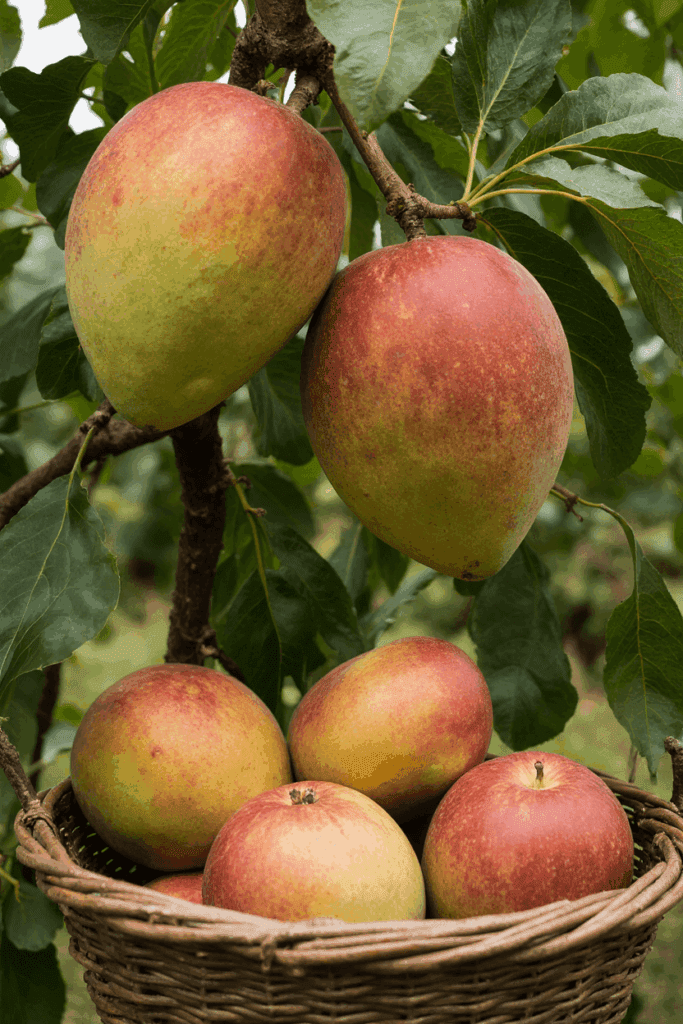
- Key Features: Round shape with distinctive red blush, exceptional sweetness
- Why Choose Apple: Highest local market demand, premium local pricing
- Yield Potential: 500-800 fruits per mature tree
- Caution: More susceptible to anthracnose – requires proper disease management
- Best For: Farmers with established local market networks
Ngowe
- Key Features: Elongated shape, fiber-free flesh, excellent juice content
- Why Choose Ngowe: Dual-purpose (fresh consumption and processing), early maturity
- Yield Potential: 600-1,000 fruits per mature tree
- Processing Advantage: Ideal for juice manufacturing, growing industrial demand
3. High-Density Farming Varieties
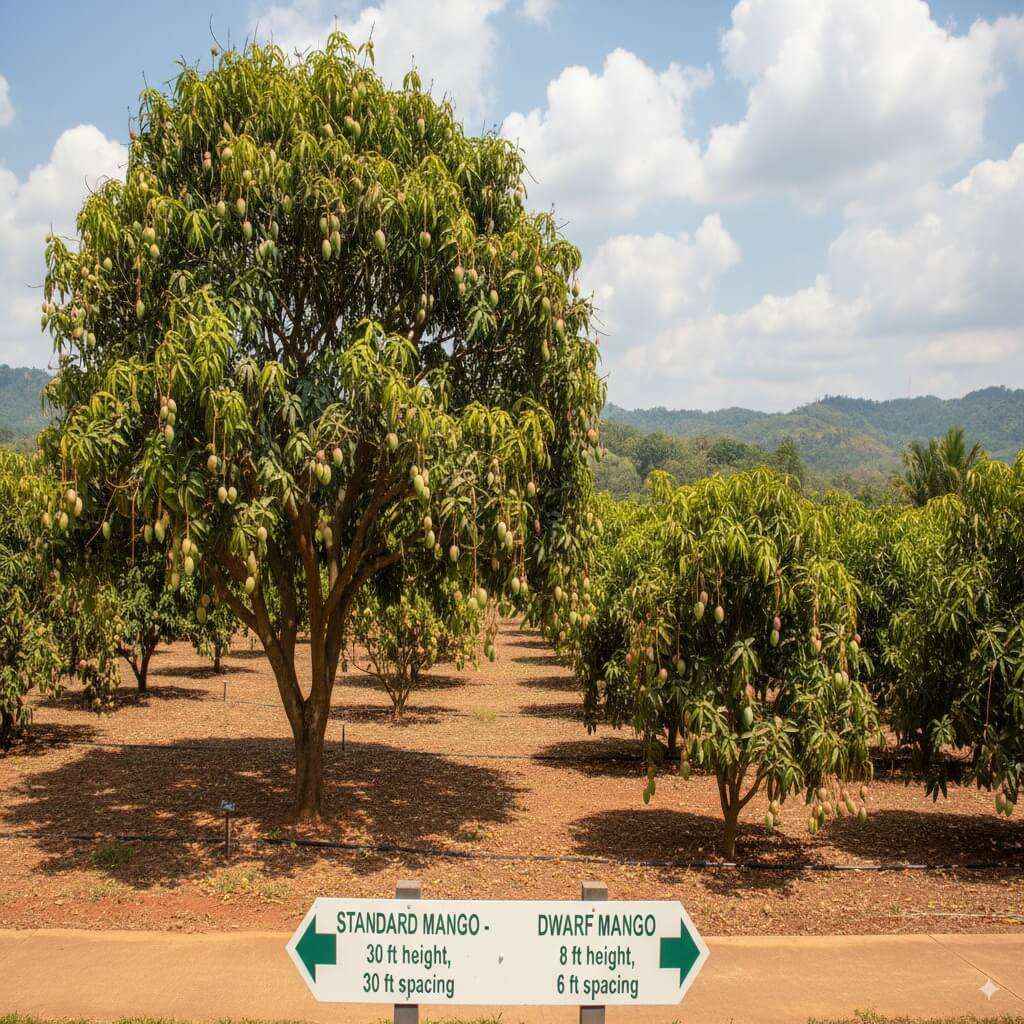
Peach Mango (Dwarf)
- Key Features: Compact growth (3-4m height), early fruiting (2-3 years)
- Why Choose Peach: Maximum land utilization, easier harvesting and management
- Planting Density: 200-250 trees per acre (vs. 40-60 for standard varieties)
- Ideal For: Small-scale farmers, intensive farming systems
Sabre (Semi-Dwarf)
- Key Features: Controlled height (4-5m), consistent production
- Yield Potential: 400-600 fruits per tree despite smaller size
- Management Advantage: Reduced pruning costs, safer harvesting
4. Emerging High-Value Varieties
Kent
- Key Features: Large size, late-season variety, excellent flavor
- Market Advantage: Extends harvest season, fills market gaps
- Export Potential: Growing demand in Middle Eastern markets
Van Dyke
- Key Features: Medium size, excellent eating quality, attractive appearance
- Processing Use: Ideal for dried mango production – emerging market opportunity
Regional Suitability Matrix
| County | Best Varieties | Primary Market Focus | Key Advantages |
|---|---|---|---|
| Mombasa | Kent, Tommy Atkins, Apple | Export + Local Premium | Port proximity, processing facilities |
| Kilifi | Ngowe, Kent, Peach | Mixed markets | Established farmer networks |
| Kwale | Apple, Haden, Sabre | Local + Regional | Lower production costs |
| Lamu | Traditional + Kent | Specialty markets | Organic farming potential |
Advanced Farming Strategies for Coastal Success
1. Rootstock Selection
- For Sandy Soils: Use Boribo or Dodo rootstock for better drought tolerance
- For Export Varieties: Polyembryonic rootstocks ensure genetic consistency
- For Problem Soils: Consider salt-tolerant rootstocks in areas near the ocean
2. Climate-Smart Spacing
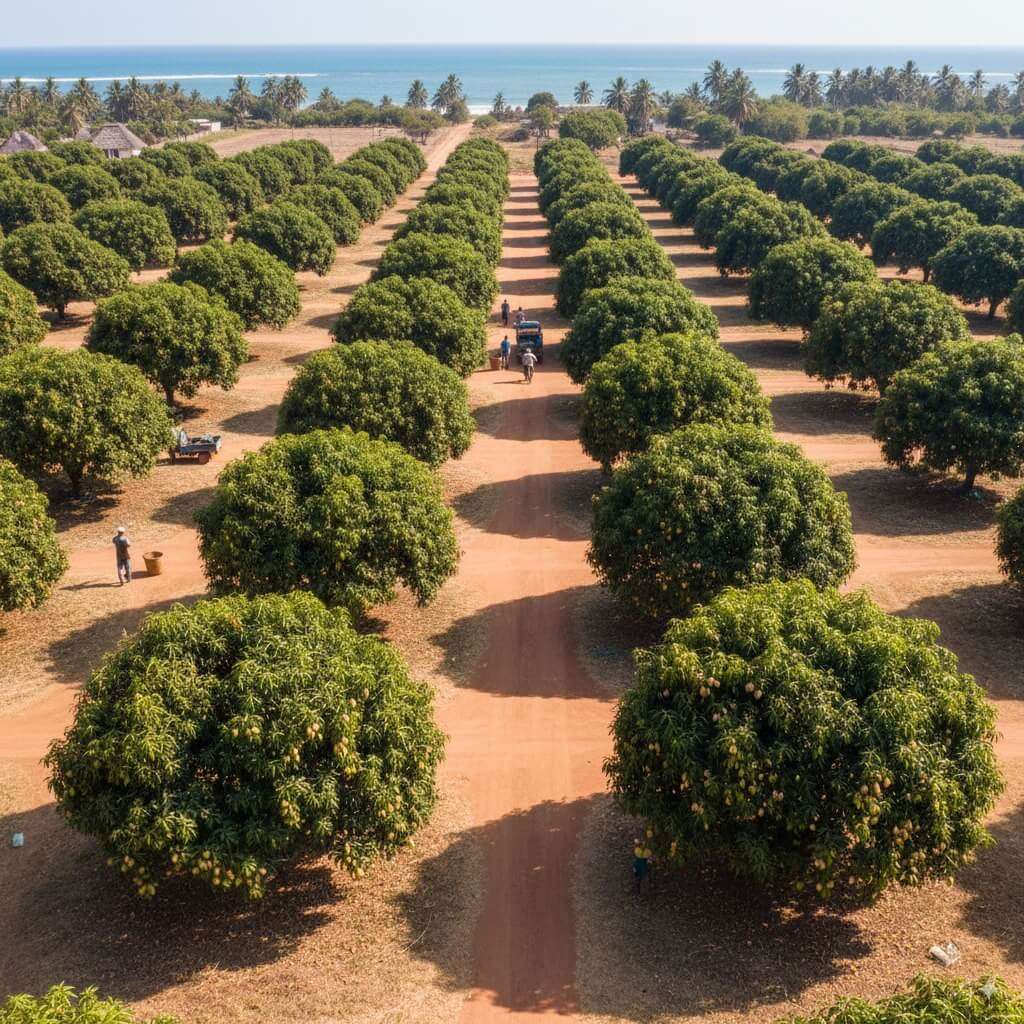
- Standard Varieties: 8m x 8m (62 trees/acre) for optimal air circulation
- Dwarf Varieties: 4m x 4m (250 trees/acre) for intensive production
- Coastal Considerations: Wider spacing in high humidity areas to reduce disease pressure
3. Integrated Pest and Disease Management
Given coastal humidity, focus on:
- Preventive Spraying: Copper-based fungicides before rainy seasons
- Biological Control: Encourage beneficial insects, use pheromone traps
- Resistant Varieties: Prioritize Tommy Atkins and other resistant varieties in high-risk areas
4. Water Management
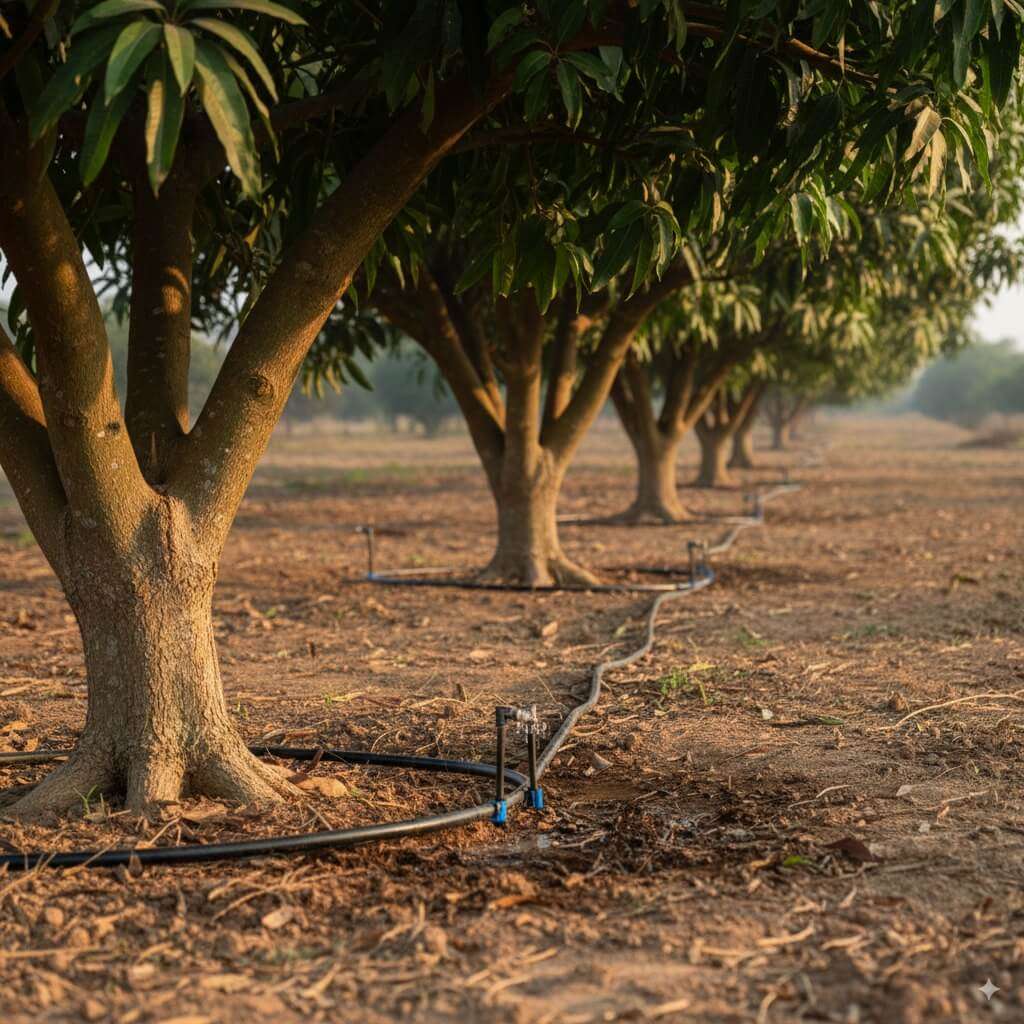
- Irrigation Systems: Drip irrigation for consistent moisture without waterlogging
- Mulching: Organic mulch to conserve moisture and moderate soil temperature
- Drainage: Ensure proper drainage to prevent root rot in heavy soils
Market Intelligence and Pricing Strategies
Export Market Opportunities
- EU Markets: Kent commands $2.50-3.50/kg FOB, strict quality requirements
- Middle East: Growing demand for Haden and Apple varieties, $1.80-2.50/kg FOB
- Regional Markets: Uganda, Tanzania, Sudan – less stringent requirements, $1.20-1.80/kg FOB
Domestic Market Trends
- Processing Industry: Ngowe preferred for juice, price premium of 20-30%
- Urban Markets: Apple mango commands highest prices (Ksh 80-150/kg retail)
- Rural Markets: Local varieties still preferred, steady demand
Value Addition Opportunities
- Dried Mangoes: 300-400% markup over fresh fruit
- Mango Puree: Industrial demand growing 15% annually
- Organic Certification: 40-60% price premium for certified organic mangoes
Investment Analysis
Cost Breakdown (per acre, 5-year projection)
- Initial Investment:
- Grafted seedlings (62 trees): Ksh 40,000
- Land preparation & planting: Ksh 25,000
- Irrigation setup: Ksh 80,000
- Total Initial: Ksh 145,000
- Annual Costs:
- Fertilizers & chemicals: Ksh 30,000
- Labor: Ksh 45,000
- Water & electricity: Ksh 15,000
- Total Annual: Ksh 90,000
- Revenue Projections (mature orchard):
- Kent (export quality): Ksh 400,000-600,000/acre
- Apple (local premium): Ksh 250,000-350,000/acre
- Mixed varieties: Ksh 300,000-450,000/acre
Break-Even Analysis
- Kent Variety: Break-even in year 4, full production by year 6
- Apple Variety: Break-even in year 3, full production by year 5
- ROI: 25-45% annually once in full production
Success Factors and Best Practices
1. Quality Seedling Sources
Partner with certified nurseries that provide:
- Disease-free grafted seedlings
- Variety authenticity guarantees
- After-sales technical support
- Proper documentation for traceability
2. Post-Harvest Excellence
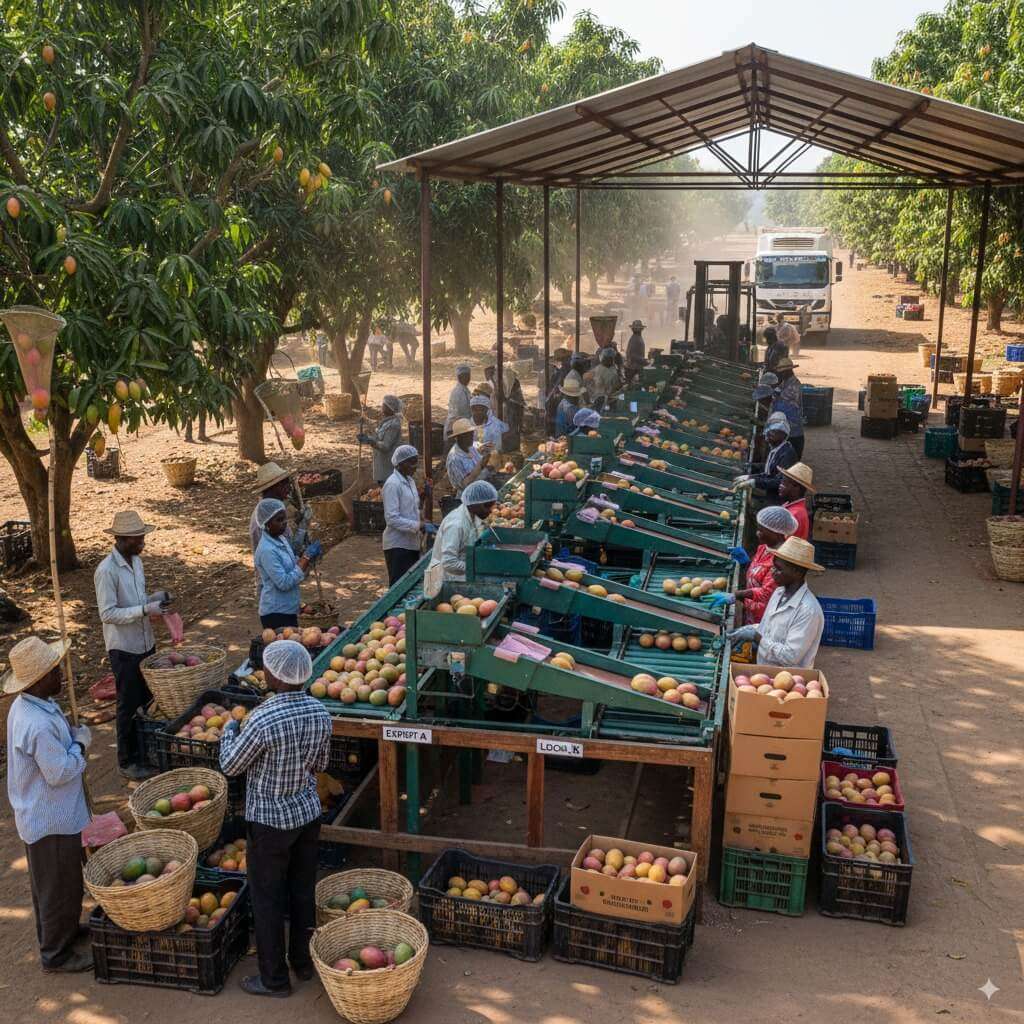
- Proper Timing: Harvest at 75-80% maturity for export, full maturity for local markets
- Handling Systems: Use padded containers, avoid dropping or bruising
- Storage Facilities: Consider investing in cold storage for export markets
- Grading Standards: Implement consistent grading for premium pricing
3. Market Linkages
- Export Channels: Partner with established exporters, meet certification requirements
- Processing Contracts: Secure forward contracts with juice manufacturers
- Direct Marketing: Develop relationships with high-end hotels, supermarkets
4. Technology Adoption
- Weather Monitoring: Use weather apps for spray timing and harvest planning
- Soil Testing: Annual soil analysis for optimal fertilizer programs
- Record Keeping: Digital platforms for tracking inputs, yields, and profitability
Risk Management Strategies
1. Climate Risks
- Drought: Install efficient irrigation, select drought-tolerant rootstocks
- Excess Rainfall: Ensure proper drainage, use fungicide programs
- Cyclones: Plant windbreaks, use dwarf varieties in exposed areas
2. Market Risks
- Price Volatility: Diversify varieties and markets
- Quality Rejection: Implement stringent quality control systems
- Competition: Focus on premium varieties and value addition
3. Production Risks
- Disease Outbreaks: Maintain spray schedules, use resistant varieties
- Pest Problems: Integrated pest management, monitoring systems
- Labor Availability: Mechanization where possible, good labor relations
Future Trends and Opportunities
Emerging Varieties to Watch
- Palmer: New variety with excellent shelf life
- Valencia Pride: Late-season variety for extended harvests
- Cogshall: Compact variety suitable for high-density planting
Market Developments
- Organic Demand: Growing 20% annually, significant price premiums
- Processing Growth: Mango leather, purees, and concentrates expanding
- Direct Export: Smallholder aggregation models reducing intermediary costs
Technology Integration
- Precision Agriculture: GPS-guided applications, variable rate technology
- Blockchain: Traceability systems for premium markets
- Mobile Marketing: Direct farmer-to-consumer platforms
Conclusion
Coastal Kenya offers exceptional opportunities for profitable mango farming, with the right variety selection being crucial for success. While Kent and Tommy Atkins represent the gold standard for export markets, varieties like Apple and Ngowe continue to dominate local premium segments.
Success in coastal mango farming requires:
- Strategic variety selection based on target markets
- Investment in quality inputs and management systems
- Development of reliable market linkages
- Continuous learning and adaptation to market trends
The future of mango farming in coastal Kenya is bright, with growing domestic consumption, expanding export opportunities, and increasing demand for processed products. Farmers who invest in the right varieties and maintain high standards will be well-positioned to capitalize on this growth.
For quality grafted seedlings and technical support, consider partnering with certified nurseries like us bwaga bei farms & nurseries or agricultural extension services. Success in mango farming is a long-term commitment that rewards those who plan carefully and execute consistently.