
Your Journey to Organic Farming Success: A Beginner’s Complete Guide for Kenyan Farmers
Learn organic farming basics in Kenya. Start with soil, natural pest control, and sustainable methods for a healthy, chemical-free farm.
Picture this: You’re walking through your own flourishing farm, breathing in the fresh air while your children safely play among rows of vibrant, chemical-free vegetables. The soil beneath your feet is rich and dark, teeming with life, and your crops are thriving without a single drop of synthetic fertilizer.
This isn’t just a dream—it’s the reality thousands of Kenyan farmers are creating through organic farming methods. Whether you’re a first-time farmer with a small plot in Kiambu, a backyard gardener in Nairobi, or someone returning to rural farming in Kisumu, this guide will walk you through everything you need to know to start your organic farming journey.
I remember chatting with Mama Grace from Nyeri last year. She told me, “I never thought I could feed my family and earn money without those expensive chemicals from the agro-vet. But now, my organic sukuma wiki fetches double the price at the market, and my soil is healthier than ever!”
Her story isn’t unique. Across Kenya, from the highlands of Meru to the coastal regions of Kwale, farmers are discovering that organic farming techniques aren’t just better for the environment—they’re often more profitable too.
What Exactly Is Organic Farming? (And Why Should You Care?)
Let’s start with the basics. Organic farming is simply growing crops and raising livestock without synthetic chemicals, GMOs, or artificial additives. Think of it as farming the way your grandmother did—naturally, sustainably, and in harmony with nature.
But here’s the thing: it’s not about going backward. Modern organic farming combines traditional wisdom with cutting-edge knowledge about soil biology, plant nutrition, and ecosystem management.

The core principles are straightforward:
- Healthy soil creates healthy plants
- Biodiversity protects your crops naturally
- Natural cycles replace artificial inputs
- Prevention beats treatment every time
Why Kenyan Farmers Are Making the Switch
You might wonder, “Why should I abandon the farming methods I know?” Well, let me share some eye-opening benefits that are transforming Kenyan agriculture:
Financial Benefits That Make Sense
Organic produce commands premium prices in Kenya’s growing health-conscious market. While conventional sukuma wiki might sell for KSh 10 per bunch, organic versions often fetch KSh 20-25. That’s more than double your income from the same plot!
Plus, you’ll slash your input costs dramatically. No more expensive synthetic fertilizers, pesticides, or herbicides. Mary from Meru tells me she saves over KSh 30,000 annually on chemical inputs alone.
Health Benefits for Your Family
When I visited organic farmer John in Nakuru, his wife served us the most delicious, nutrient-packed vegetables I’d ever tasted. “My children rarely get sick now,” she mentioned casually. “The doctor says their immune systems are stronger since we started eating our own organic produce.”
This isn’t coincidence. Studies show organic foods contain higher levels of antioxidants and lower levels of harmful residues.
Environmental Impact That Matters
Your farm becomes a haven for beneficial insects, birds, and soil organisms. The biodiversity explosion is remarkable—I’ve seen organic farms buzzing with life while neighboring conventional plots seem eerily quiet.

Essential Organic Farming Methods Every Beginner Should Master
1. Soil Preparation: Your Foundation for Success
Think of soil as a living ecosystem, not just dirt. Healthy soil is your most valuable asset in organic farming.
The Organic Soil Building Process:
Start by testing your soil pH—most crops thrive between 6.0-7.0. You can get simple test kits from agricultural stores in major towns for around KSh 500.
Composting: Your Secret Weapon
Creating compost is like cooking a nutritious meal for your soil. Here’s my foolproof recipe:
- 3 parts “brown” materials (dry leaves, maize stalks, paper)
- 1 part “green” materials (fresh weeds, kitchen scraps, manure)
- Turn weekly for 6-8 weeks
- Keep moist but not waterlogged
David from Eldoret swears by his three-bin system: “I always have finished compost ready while the next batch is cooking.”
Vermicomposting for Faster Results
Red worms can transform your organic waste into “black gold” in just 8-12 weeks. A simple setup costs under KSh 5,000 and produces premium fertilizer worth KSh 20,000 annually.
2. Natural Pest Control That Actually Works
Forget about reaching for the spray bottle every time you see an insect. Organic pest control works with nature, not against it.
Companion Planting Magic
Certain plant combinations create natural pest barriers:
| Main Crop | Companion Plant | Pest Deterred |
|---|---|---|
| Tomatoes | Basil | Aphids, whiteflies |
| Maize | Beans | Maize stalk borer |
| Cabbages | Marigolds | Diamondback moth |
| Onions | Carrots | Carrot fly, onion fly |
Homemade Organic Sprays
Neem Oil Solution: Mix 2 tablespoons neem oil + 1 tablespoon liquid soap in 1 liter water. Spray during cool evening hours.
Chili-Garlic Spray: Blend 10 hot chilies + 5 garlic cloves in water. Strain and spray for aphid control.
Soap Spray: 2 tablespoons mild soap in 1 liter water effectively controls soft-bodied insects.
3. Water Management for Sustainable Growth
Water is precious in Kenya, and organic farming emphasizes conservation and efficiency.
Drip Irrigation Systems
A basic drip system costs KSh 15,000-25,000 for a quarter-acre but saves 50% water while increasing yields by 30%. The investment pays for itself within one season.
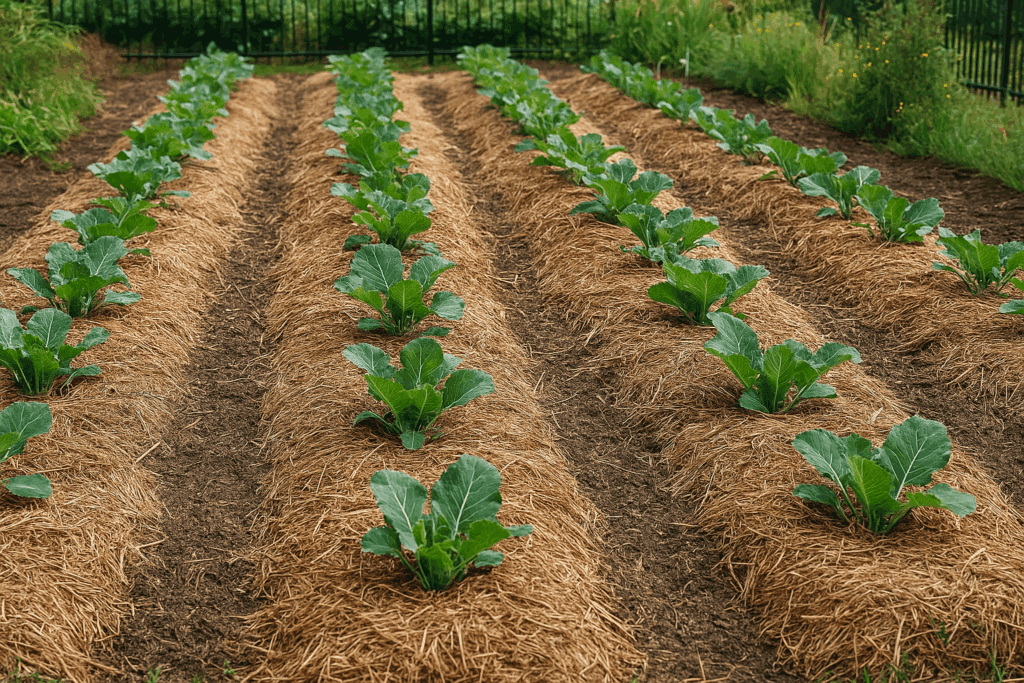
Mulching: Your Moisture Guardian
Apply 5-10cm of organic mulch around plants. Use locally available materials like:
- Maize stalks (chopped)
- Dried grass
- Coffee husks (in coffee-growing areas)
- Banana leaves
Crop Selection and Rotation Strategies
Best Organic Crops for Kenyan Beginners
Not all crops are equally suited for organic production. Start with these proven winners:
Vegetables:
- Sukuma Wiki (kales) – thrives organically, high market demand
- Spinach – fast-growing, pest-resistant
- Tomatoes – premium prices for organic varieties
- French beans – nitrogen-fixing, excellent cash crop
- Capsicum – high value, disease-resistant varieties available
Pro Tip: Starting with quality organic seedlings gives you a huge advantage. While you can grow from seed, healthy seedlings from certified organic sources ensure you’re starting with disease-free, vigorous plants that have been raised without synthetic chemicals from day one.
Herbs and Spices:
- Basil – natural pest deterrent, valuable crop
- Rosemary – drought-tolerant, minimal care needed
- Coriander – fast turnover, consistent demand
Smart Crop Rotation Planning
Rotate crops in families to break pest and disease cycles:
Year 1: Legumes (beans, peas) – fix nitrogen Year 2: Leafy greens (sukuma wiki, spinach) – use nitrogen
Year 3: Root crops (carrots, radishes) – break up soil Year 4: Fruiting crops (tomatoes, peppers) – heavy feeders
Getting Your Organic Certification
Organic certification is not mandatory for local sales in Kenya. But it is essential if you want to:
- Access export markets
- Supply supermarkets or NGOs
- Build strong trust with health-conscious buyers
Certification Process Overview
The full process takes 12 to 24 months, depending on your farm condition and recordkeeping. It includes:
- Application and Documentation:
Cost ranges from KSh 15,000 to KSh 25,000 depending on the certifying body and farm size. - Farm Inspection:
A certified inspector visits your farm to verify your practices and records. - Transition Period:
If your farm previously used chemicals, it goes through a 2–3 year conversion period to allow full detoxification. - Annual Reviews:
You must submit records and pass yearly inspections to maintain certification.
Local Certification Bodies in Kenya
- KOAN (Kenya Organic Agriculture Network)
- EnCert (Enorganic Certification Limited)
- KEBS (Kenya Bureau of Standards, through the KS 1758 standard)
- International options like Ecocert (mainly for export)
Record Keeping Made Simple
Maintain detailed records of:
- Input purchases and applications
- Harvest quantities and dates
- Sales records
- Field operations
Use a simple notebook or smartphone app—consistency matters more than complexity.
Common Challenges and How to Overcome Them
Challenge 1: Initial Yield Drops
“My first organic season was terrible,” admits Peter from Kiambu. “Yields dropped 30%, and I almost gave up.”
This is normal during transition. Your soil needs time to rebuild its natural fertility. Stick with it—most farmers see improvements by the second season.
Challenge 2: Pest Pressure During Transition
Chemical farming disrupts natural predator-prey balances. It takes time for beneficial insects to return.
Solution: Start small, learn gradually, and don’t convert your entire farm at once.
Challenge 3: Market Access
Finding buyers for organic produce can be challenging initially.
Solutions:
- Start with local farmers markets
- Connect with health food stores
- Join organic farmer associations
- Use social media to reach health-conscious consumers
Building Your Organic Farming Business
Start Small, Think Big
Begin with a quarter-acre demonstration plot. This allows you to:
- Learn techniques without huge risks
- Compare organic vs. conventional results
- Build confidence and expertise
- Develop market relationships
Essential Equipment for Beginners
| Item | Cost (KSh) | Priority |
|---|---|---|
| Compost thermometer | 1,500 | High |
| Soil pH test kit | 800 | High |
| Basic hand tools | 3,000 | High |
| Watering can/sprayer | 1,200 | High |
| Wheelbarrow | 4,500 | Medium |
| Drip irrigation kit | 20,000 | Medium |
Marketing Your Organic Produce
Direct Sales Strategies:
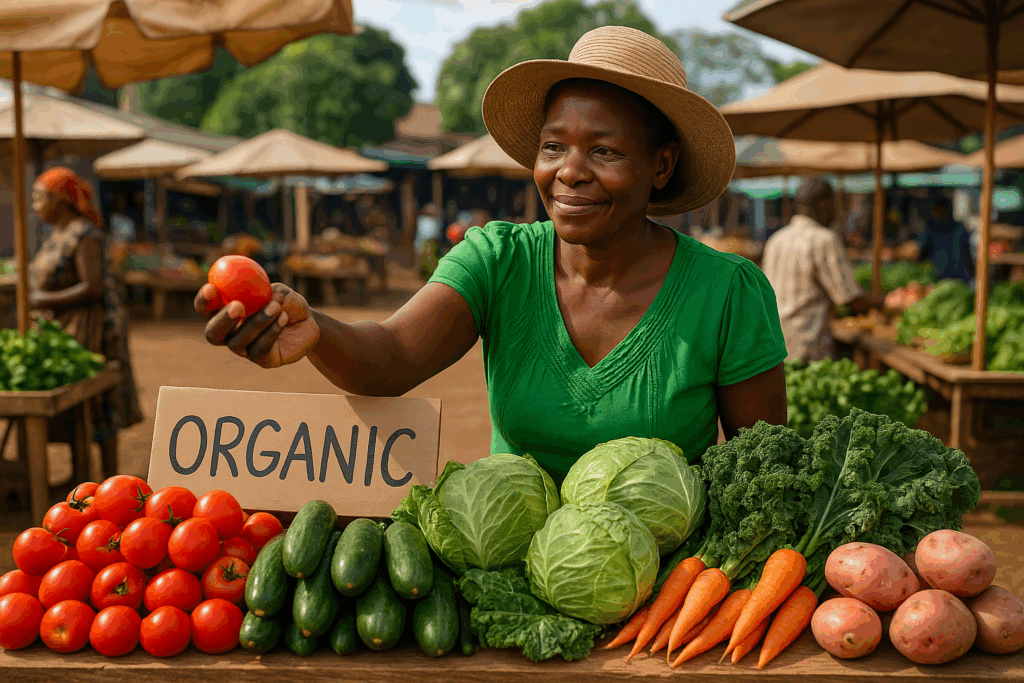
- Set up a roadside stand
- Join weekend farmers markets
- Create WhatsApp groups with regular customers
- Partner with local restaurants
Online Marketing:
- Post attractive photos on social media
- Share your farming story
- Highlight health benefits
- Show your sustainable practices
Creating Your Action Plan
Month 1-2: Foundation Setting
- Test your soil
- Start your compost pile
- Research local organic farmers
- Begin record-keeping systems
Month 3-4: Implementation
- Prepare planting beds with organic matter
- Source quality organic seedlings or plant seeds
- Install water management systems
- Begin pest monitoring routines
Seedling Selection Tips: Look for seedlings with:
- Strong, green foliage (no yellowing)
- Well-developed root systems
- No signs of pest damage
- Compact, sturdy growth (not leggy)
- Certification of organic growing methods
Month 5-6: Monitoring and Adjusting
- Track crop performance
- Fine-tune irrigation schedules
- Harvest early crops
- Plan next season improvements
Resources and Support in Kenya
Training Opportunities
- Kenya Institute of Organic Farming (KIOF) – offers comprehensive courses
- Agricultural Extension Officers – many now trained in organic methods
- Farmer Field Schools – hands-on learning with neighbors
- Online Resources – YouTube channels, farming forums
Input Suppliers
- Certified organic seed suppliers in Nairobi, Mombasa, Kisumu
- Quality organic seedlings from trusted local nurseries – saves 4-6 weeks and ensures strong starts
- Compost accelerators and biological inputs
- Organic-approved pest control products
- Testing and certification services
Farmer Networks
Join local organic farming groups. The support, knowledge sharing, and market connections are invaluable. WhatsApp groups have become particularly popular for quick advice and market information.
Your Organic Farming Success Story Starts NowFAQs: Your Burning Questions Answered
Q1: How do I start organic farming in Kenya with little experience?
Start small—try a backyard garden or a few crops with compost and crop rotation. Learn from local organic farmers and community groups.
Q2: Can organic farming be profitable in Kenya?
Yes! Organic products often fetch better prices, especially in urban markets and export sectors. Plus, you save on expensive synthetic inputs.
Q3: What are common challenges of organic farming?
Challenges include longer transition times, pest management without chemicals, and getting organic certification. But these are manageable with training and planning.
Q4: Is organic certification important?
Yes, it builds trust with buyers. In Kenya, certification can be through the Kenya Organic Mark (KOM) or international certifications if you plan to export.
Q5: What natural fertilizers can I use?
Farmyard manure, compost, green manure (plant material), bone meal, and liquid compost teas are great choices.
Q6: How do I manage pests organically?
Use companion plants, neem spray, biological controls like ladybugs, and crop rotation.
Q7: Can I combine livestock with organic farming?
Absolutely! Chickens, goats, and even bees can add value through manure, pest control, and pollination.
Transitioning to organic farming methods isn’t just about changing what you put on your crops—it’s about transforming your entire relationship with the land. You’re not just growing food; you’re nurturing an ecosystem, protecting your family’s health, and contributing to a more sustainable Kenya.
Remember Sarah from Machakos, who started with just 10 organic tomato plants in her backyard? Three years later, she’s supplying five restaurants in Nairobi and employs three neighbors. “I wish I’d started sooner,” she always says with a smile.
Your journey might look different, but the potential is just as exciting. Whether you’re growing organic vegetables for your family’s table or building a business that supports your community, every step you take toward organic farming is a step toward a healthier, more prosperous future.
The soil is waiting. Your community is ready for fresh, healthy food. The market rewards quality organic produce.
What’s stopping you from planting your first organic seed tomorrow?
Ready to transform your farming practice? Start by testing your soil this week, begin your first compost pile, and connect with one local organic farmer. Your future self—and your family—will thank you for taking this important step today.
Share this guide with fellow farmers, bookmark it for reference, and most importantly, get your hands dirty with organic farming methods that work in Kenya’s unique climate and conditions.
The future of farming is organic, sustainable, and profitable. Your success story starts with that first seed planted in healthy, chemical-free soil.